RTP 96% Explained: What a Slot’s Return Really Means Over 100, 1,000 and 100,000 Spins
When we open a slot at a Canadian online casino and see “RTP 96%” in the info screen, it’s easy to assume that we’ll get most of our money back, give or take a few bucks. In reality, that number is more about the game’s long‑term behaviour than tonight’s session on your phone in Toronto or Vancouver.
Across Canada, slots are offered in different environments: Ontario’s regulated iGaming market under AGCO and iGaming Ontario, provincial lottery sites, Kahnawake‑licensed platforms, and a mix of offshore casino sites that accept Canadians. No matter where you play, understanding what 96% RTP really means over 100, 1,000 or even 100,000 spins can help you set better expectations and choose safer, more transparent casinos.
Let’s break it down in plain language and keep it grounded in how you actually play.
What RTP 96% Actually Means (and What It Doesn’t)
RTP 96% means that, in the long run and across all players combined, a slot is designed to pay back about $96 for every $100 wagered. It does not mean you personally will get $96 back every time you bet $100, and it definitely doesn’t remove the risk of losing your deposit.
Return to Player (RTP) is a theoretical figure calculated by the game developer. They simulate millions or even billions of spins and measure how much is paid out versus how much is wagered. When those simulations show about 96% of total bets coming back as prizes, the game is labelled “96% RTP”.
In practice, here’s what that really means:
- It’s a long‑term average, not a prediction for one night or one player.
- It’s collective, based on all player results pooled together.
- It implies a house edge of 4% (100% – 96%), which is the casino’s long‑term margin.
From your point of view, you might see anything from a quick bust to a huge win, even though the underlying math adds up to 96% over massive sample sizes.
RTP and fairness are closely tied to licensing and regulation. In legal markets like Ontario, AGCO and iGaming Ontario require that slots undergo independent testing. Labs run extensive simulations to confirm the published RTP and ensure the random number generator behaves as it should.
Reputable Canadian online casino sites outside Ontario, including those licensed in Kahnawake or other recognised jurisdictions, also submit their games for third‑party testing. This is one of the key safeguards against an online casino scam scenario where results are secretly manipulated.
A quick practical step here: before you spin, open the slot’s info or help menu and scroll to the bottom. Legitimate games almost always state something like “Return to player: 96.0%”. If you can’t find RTP anywhere, it’s a red flag, especially on an unlicensed or anonymous Bitcoin casino.
A simple example helps put this in context:
- You play a 96% RTP slot at a legal online casino in Ontario.
- You spin 100 times at $1 per spin, wagering $100 in total.
- The “average” theoretical return is $96, but you might:
- End with $20 after a cold streak,
- Finish at around $96,
- Or walk away with $200+ after a lucky bonus round.
All of these outcomes are compatible with a 96% RTP game. The math doesn’t promise a specific result; it describes tendencies over huge numbers of spins.
RTP vs. Reality – 5 Quick Truths
- RTP is long‑term – think millions of spins, not a single evening.
- RTP is collective – it covers all players, not just your account.
- RTP doesn’t stop losses – a high RTP only reduces the expected loss over time.
- RTP doesn’t show volatility – two 96% games can feel totally different.
- RTP relies on proper licensing – stick to a licensed casino where RTP is independently audited.
96% RTP Over 100, 1,000, and 100,000 Spins: What to Expect
When we see “RTP 96%” on online casino slots, the natural question is: what does this mean for my bankroll over a certain number of spins? The answer changes a lot between 100 spins, 1,000 spins, and the kind of massive sample sizes used by game studios.
To keep things relatable, let’s use common stakes for online casino Canada players: $0.50 and $1 per spin.
Over 100 spins
At $1 per spin, 100 spins means you wager $100 total. Over such a small sample:
- Outcomes are highly variable.
- A single bonus round or batch of free spins can make or break the session.
- Your ending balance could realistically be:
- Close to $0 if you hit very few features,
- Around $90–$110 if things are fairly average,
- Or $200+ if you get lucky with a bonus.
For someone in Calgary spinning on their phone during a hockey intermission, 100 spins is a quick session that can go almost any direction, regardless of the 96% label.
Over 1,000 spins
At $0.50 per spin, 1,000 spins means you’ve wagered $500. This is more like what a regular player in Vancouver might rack up over several evenings.
At 96% RTP, the theoretical average return on $500 wagered is $480. In practice:
- You could end up somewhere around $350–$650 without anything unusual happening.
- A streak of bonuses could push you into profit.
- A series of dry runs can still see you drop much more than the “average” suggests.
You’re closer to seeing the game’s true character at this point, but you’re still not guaranteed to be anywhere near exactly 96%.
Over 100,000 spins
This level is where the published RTP really shows through, but it’s more about the game as a whole than one casual player.
- At $0.50 per spin, 100,000 spins = $50,000 wagered.
- In theory, a 96% RTP slot will pay out about $48,000 over that full sample.
- That figure reflects a mix of many players’ sessions, from quick losses to huge wins.
For an individual player, getting to 100,000 spins would require a massive amount of time and a serious bankroll. It’s not something most Canadians will ever do, which is why RTP should be seen as a guide to the game’s long‑term “price” rather than a personal guarantee.
A useful way to think about it: your actual result will land somewhere on a wide bell curve around that 96% line. The fewer spins you play, the wider that curve feels.
How Spin Count Changes Your Experience
- 100 spins: Very streaky, totally dominated by short‑term luck.
- 1,000 spins: Still swingy, but you get a better sense of the game’s behaviour.
- 100,000 spins: Where the published RTP stabilises for the game, not realistically for a casual player.
- Fewer spins = less predictable – don’t expect 96% on a weekend session.
- More spins = more rake to the house – over time, the 4% house edge adds up.
A practical move before you play: decide your rough spin count based on your budget. For instance, if you’ve set aside $50, you might plan around 200 spins at $0.25. That way, you’re thinking about total exposure, not just “I’ll see how it goes”.
RTP vs Volatility: Why Two 96% Slots Feel Totally Different
If you’ve ever noticed that one 96% RTP slot drains your bankroll quickly while another lets you play for ages, you’ve run into volatility. RTP tells us how much the game pays back over the long haul; volatility tells us how it delivers those returns.
What volatility means
- Low volatility:
- Frequent small wins.
- Fewer long dry streaks.
-
Less chance of a massive hit.
-
High volatility:
- Many dead spins or tiny wins.
- Occasional large payouts.
- Bigger emotional swings.
Both types can have 96% RTP. A lot of popular Pragmatic Play slots, for example, are known for being high volatility: they keep a big chunk of the payout potential in rare bonus rounds.
How volatility changes 100 vs 1,000 spins
On a low‑volatility 96% slot:
- 100 spins at $0.50 might feel like:
- Lots of $0.20–$1 wins,
- One or two minor features,
- Ending somewhere not far from your starting balance.
On a high‑volatility 96% slot:
- 100 spins at $0.50 might mean:
- Long stretches of nothing,
- Maybe one exciting but rare bonus,
- A real chance of ending with very little – or suddenly spiking to a big win.
Over 1,000+ spins, these patterns become even more obvious. You “feel” the game’s volatility in your bankroll’s ups and downs, even though the long‑term RTP is identical.
A concrete comparison:
- Slot 1 – Low volatility, 96% RTP, 500 spins at $0.50 ($250 wagered):
- Frequent small hits keep you in the game.
- You might walk away with $150–$230.
-
It feels more like steady entertainment than a roller coaster.
-
Slot 2 – High volatility, 96% RTP, same 500 spins:
- You could bust early if features don’t land.
- Or you could hit a $100+ bonus and end at $400–$500 or more.
- The ride is choppy, with more emotional highs and lows.
Choosing Volatility for Your Play Style
-
Low volatility 96% RTP
– Better if you want longer sessions and dislike big swings. -
Medium volatility 96% RTP
– A balanced choice with a mix of small and medium wins. -
High volatility 96% RTP
– Suits players comfortable with risk and long dry spells, and who have a deeper bankroll. -
If long losing streaks tilt you, low/medium volatility is usually safer.
- If you’re okay with swings for a shot at those big bonus hits, medium/high volatility might appeal.
A smart step here: before you deposit, search the slot’s name plus “volatility” or “variance”. Most reputable online casino review content will tell you if it’s low, medium, or high volatility, so you can match it to your budget and risk tolerance.
How RTP is Set, Tested, and Displayed at Canadian and Offshore Casinos
RTP numbers don’t come from the casino itself. They’re built into the game by the software provider, then checked by independent labs, and finally offered to casinos operating under different licences.
How providers set RTP
Game studios create the slot’s math model, including:
- Reel layout and symbol frequencies.
- Paytable values.
- Bonus round triggers and payouts.
From there, they simulate large numbers of spins to see what long‑term return the design produces. Many online casino games are released with multiple RTP “versions” – for example, 96.0%, 94.0%, or 92.0%. Individual casinos can choose which setting they offer.
Role of testing labs and regulators
Before a slot appears at a legal online casino in Ontario, it must be tested and certified. Independent labs run their own simulations to confirm that the game:
- Matches the advertised RTP.
- Uses a compliant random number generator.
- Follows the rules filed with the regulator.
AGCO and iGaming Ontario require this process for any approved operator. Kahnawake Gaming Commission and other recognised regulators also depend on third‑party testing for licensed casino platforms.
At reputable offshore casino sites, the process is similar, though enforcement can vary. The key is whether the casino holds a visible, verifiable gambling licence and works with known software providers.
By contrast, unlicensed or anonymous sites – including some Bitcoin casino operators – may claim high RTPs without any real oversight. That’s where the risk of game manipulation and non‑payment is much higher.
Where to find RTP information
You can usually see the slot’s RTP in one of these places:
- The in‑game help/paytable section.
- The provider’s official website.
- Reliable online casino comparison or review resources that list RTP and testing details.
Don’t be surprised if RTP varies slightly between online casino sites. If a provider offers multiple presets, one platform might choose the 96% version while another uses a lower one to increase its house edge.
RTP & Fairness Checklist for Canadian Players
- Check the casino’s gambling licence. Look for AGCO/iGaming Ontario, Kahnawake, or another recognised authority.
- Open the slot’s help menu and find the RTP % (e.g., “Return to player: 96.02%”).
- When in doubt, cross‑check RTP on the game provider’s official site.
- Read at least one independent online casino review that talks about fairness testing and RTP.
- Avoid online casino sites that hide licence details, RNG certifications, or RTP information.
Using RTP to Make Smarter, Safer Slot Choices
Knowing that a slot has 96% RTP is only useful if you combine that knowledge with volatility, budget, and basic safety checks on the casino itself.
RTP as one factor among many
Choosing slots with RTP around 96–97% is usually better value than playing low‑RTP games in the 90–93% range. Over time, that difference adds up.
For example:
- A 96% slot has a 4% house edge.
- A 90% slot has a 10% house edge.
On $1,000 total bets, the expected long‑term cost of playing is:
- Around $40 on the 96% game.
- Around $100 on the 90% game.
In reality, results will vary, but you’re generally paying more for the same entertainment on the low‑RTP option.
That said, you still want to consider:
- The game’s features and theme.
- Whether you enjoy the bonus mechanics.
- How the volatility fits your comfort level.
Comparing slots and casinos with RTP in mind
Many Canadian online casino platforms now list RTP in their game info, and some online casino comparison tools let you filter by RTP. When you’re choosing where to sign up:
- Favour a safe online casino that’s transparent about RTP.
- Be cautious if a site offers lots of “mystery” slots with no clear information, especially if it’s not clearly licensed.
If you’re in Ontario, sticking to AGCO‑regulated sites gives you an extra layer of protection. Outside Ontario, Kahnawake‑licensed operators and other well‑regulated casinos can still be solid choices if you double‑check their credentials.
Real‑money play, bonuses, and wagering
When you’re dealing with deposits and bonuses, RTP interacts with other rules in subtle ways.
A clear flow to follow:
-
Before signing up
– Pick a licensed Canadian online casino or reputable offshore casino.
– Check payment methods that suit Canadians: Interac e‑Transfer, credit card, maybe e‑wallets.
– Look at a few of the main slots and note their RTP and volatility. -
During sign‑up
– Decide if you actually want the welcome bonus.
– Read the bonus terms carefully, especially wagering requirements (e.g., 35x bonus).
– Check which games contribute 100% to wagering and whether any high‑RTP slots are excluded or capped. -
Upon receiving the bonus
– Keep track of how much you need to wager before withdrawing.
– Remember that even at 96% RTP, a high wagering requirement can make a bonus hard to convert to withdrawable cash.
– Don’t increase bet sizes just because you’re using “bonus money” – the house edge still applies.
Some online casino bonus offers restrict play on certain online casino games or reduce the contribution of specific high‑value slots to wagering. If you’re trying to meet wagering on a 92% RTP game instead of a 96% one, the effective cost of clearing that bonus rises sharply.
Responsible gambling and RTP
Understanding RTP helps you see that slots are negative‑expectation games over time. It doesn’t remove the risk of harm if your play gets out of control.
Useful tools to look for at a safe online casino:
- Deposit limits (daily, weekly, monthly).
- Loss limits and reality checks.
- Time‑out options and self‑exclusion.
- Clear links to provincial support services like ConnexOntario or local problem gambling helplines.
If you catch yourself chasing losses because “the game owes you” after a bad run, that’s a good moment to take a break. RTP doesn’t mean the slot will suddenly turn in your favour – it simply means the math will continue to grind towards that 96% average over very large numbers of spins.
Pre‑Play Decision Checklist (Applying RTP in Practice)
- Pick the site: choose a licensed Canadian online casino or well‑regulated offshore casino with transparent RTP info.
- Check the slot’s RTP: aim for 96%+ when you care about value.
- Assess volatility: decide whether you want smoother play (low/medium) or a swingier ride (medium/high).
- Set budget and spins: e.g., $50 total, roughly 200 spins at $0.25.
- Plan your exit: pre‑set win and loss limits, and stick to them.
- Use tools: set deposit limits or time‑outs if you’re worried about overspending.
RTP 96%: Quick FAQs for Canadian Players
Does 96% RTP mean I’ll definitely get $96 back for every $100 I wager?
No. 96% RTP is a long‑term theoretical average based on huge numbers of spins. In a typical session of a few hundred spins, you can easily end far below or above 96%. It’s closer to saying, “Over a very long horizon, the game keeps about 4% of everything bet.”
Is 96% RTP good for an online slot?
For online casino slots, typical ranges look like this:
- Around 90–93%: low for online, often seen in some branded or progressive jackpot games.
- Around 94–96%: fairly standard.
- 96% and above: generally considered good value for online play.
So 96% RTP is respectable. All else being equal, a 96% game is usually a better deal than a 92% one, but you still have to factor in volatility and your own preferences.
Can online casinos in Canada change the RTP of a slot?
The game provider usually offers preset RTP versions. Casinos can choose which version to host, but they can’t arbitrarily change the math themselves.
In regulated markets like Ontario:
- Operators must use versions approved by AGCO/iGaming Ontario.
- Any change to the game or its RTP has to go through testing and approval.
On offshore or Kahnawake‑licensed sites, rules depend on the regulator, but reputable casinos will still stick to certified versions. To be safe, always check the in‑game RTP and, if needed, confirm it through trustworthy online casino review content.
How many spins do I need before RTP “kicks in”?
There’s no magic spin count where everything perfectly lines up at 96%. Even after 10,000 spins, you can still be above or below the theoretical return.
RTP is designed for extremely large samples – the kind of numbers only testing labs and combined player bases reach. As a personal rule of thumb, assume that RTP describes a general trend, not a promised landing point for your own play.
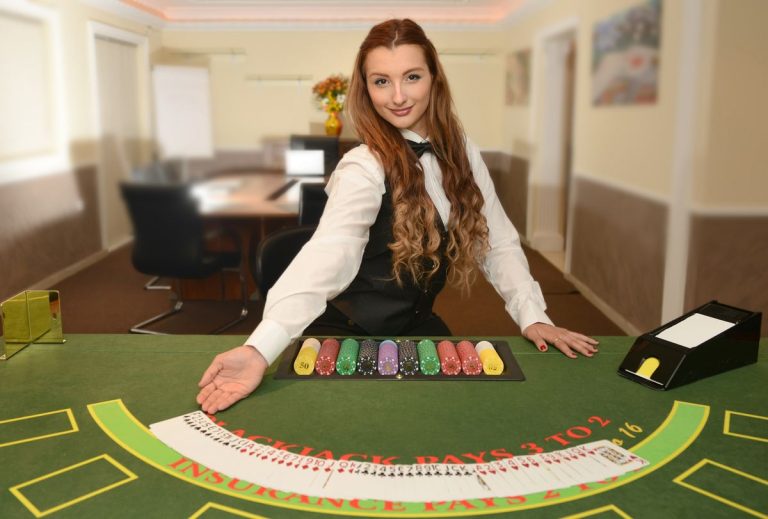
Is RTP different at live dealer casino games like blackjack or baccarat?
Yes. Live dealer casino games like blackjack and baccarat use different math. Instead of RTP labels, they’re usually described by house edge.
- Standard blackjack with good rules and basic strategy can have a house edge below 1%.
- Baccarat banker bets also have a relatively low house edge compared with most slots.
In practice, that means live casino table games can offer higher long‑term returns than most slot machines, but only if you play with optimal or near‑optimal strategy.
Can I use RTP to guarantee profit from slots?
No. Even with 96% RTP, slots are negative‑expectation games over the long run because of the house edge. RTP can help you estimate the “cost” of playing and compare games, but it can’t turn slots into a guaranteed moneymaker.
If you’re noticing stress, chasing losses, or playing with money you can’t afford to lose, it’s important to step back. Use self‑exclusion tools, break options, or reach out to provincial support services.
How do I know if a casino is honest about RTP?
Look for three key signs:
- A clear, verifiable gambling licence (AGCO/iGaming Ontario, Kahnawake, or another recognised regulator).
- Transparent RTP and rules displayed inside the games.
- Evidence of independent testing (logos from known labs, or mentions in reliable reviews).
If a site hides its licence details, offers no RTP information, and makes vague promises instead of clear terms, it’s safer to move on and look for a more trustworthy, scam‑free casino.
To put all of this into practice today, you can:
- Open your usual slot, check its RTP and volatility, and decide if it still fits your budget and expectations.
- Review your favourite Canadian online casino or offshore casino account and confirm that it’s properly licensed and transparent about RTP.
- Set a clear budget for your next session, choose a 96%+ RTP game that matches your risk comfort, and use deposit or loss limits to keep play firmly on the fun side.